
The Long Game, the Jim Downs Method
A method for the decisions that matter
Every person starts somewhere different. The Long Game begins with understanding your circumstances before deciding what kind of property opportunity, if any, is worth exploring.
Five principles. A longer view.
The Number, The Ground, The Move, The Hold and The Turn are decision principles. They apply whether you are buying a home, investing or developing. Each pathway then has its own practical process.
Before you commit
Principle 1
The Number
What are you working towards?
Start with the life you want to fund, including the life costs ahead such as school years, cars and health, and the time you have to get there. The figure you need becomes the target the whole plan works towards. It is worked out in today's money, and the same life will cost more by the year you stop, so the figure is revisited rather than set once.
Good to know: Every pathway starts here, including buying a home to live in.
-
Principle 2
The Ground
Where do you stand today?
Understand your resources, commitments, likely costs and capacity for uncertainty: what you own, owe, earn and spend.
Good to know: Anything about borrowing is assessed by a licensed broker or lender.
-

Principle 3
The Move
What, if anything, should happen next?
Compare the options, their risks and the people needed to assess them properly. The answer may be a pathway now, or getting into a position to buy and hold first. Roles and commercial arrangements are set out in writing before anything proceeds.
Good to know: A solicitor reviews any contract before you sign.
Once you go ahead

Principle 4
The Hold
What will ownership ask of you?
Consider income, ongoing costs, vacancies, maintenance and a plan for less favourable conditions. For a build, that includes the time before anything is earned.
Good to know: Tax and insurance questions go to your accountant and insurer.
-
Principle 5
The Turn
When does the plan turn into income?
While you are building, revisit the numbers as life, costs and the market change: keep, adjust or go again. At retirement the plan turns. You sell what is needed to clear the debt and fund the life you planned for, with your accountant's advice on the tax.
Three tests under every step
Whatever the pathway, every decision gets checked the same way before anyone moves.
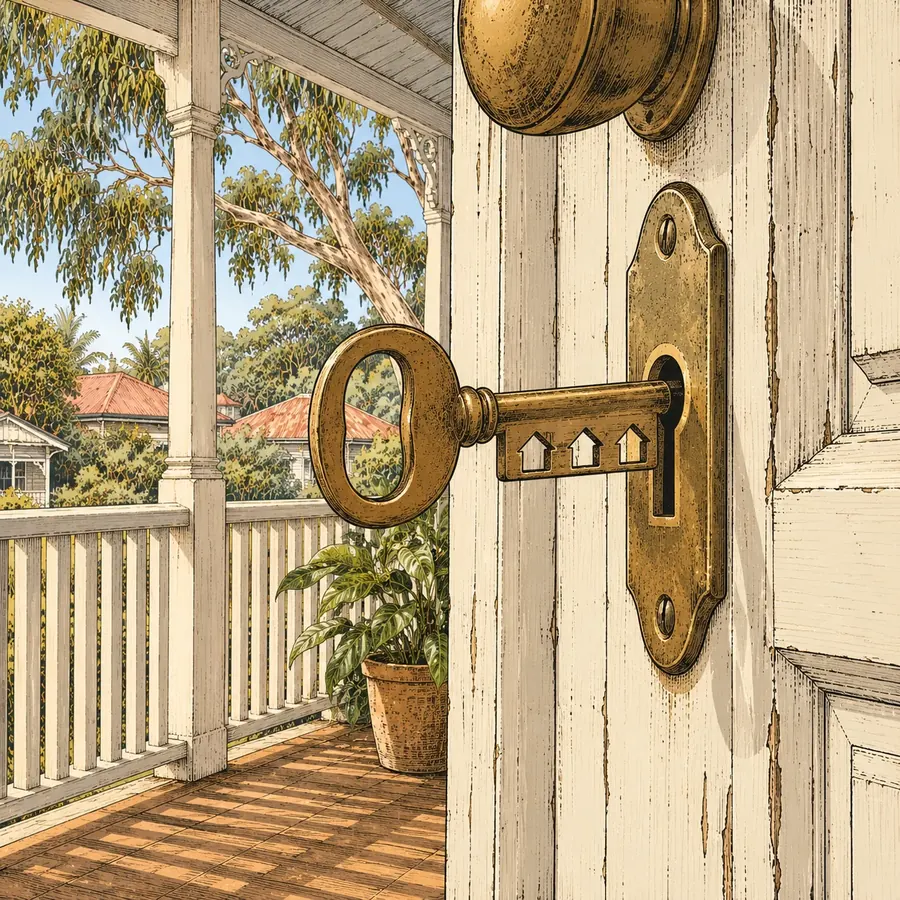
Three tests sit under every step: the three houses cut into the key. Open each one. When all three line up, the key turns.
Not simply “What can I buy?” but “What can I afford, what am I trying to achieve, and what happens after I buy?”
A home to live in. An investment property. A development. A specialist arrangement. Different pathways, considered with the same discipline.
There is no value in making a property decision that does not stand up to scrutiny. When every cut lines up, the key turns.
Who does what
The principles stay the same on every pathway. The practical process, and who is responsible for each part, depends on the pathway and is set out in writing before work begins.
What Jim does personally
The thinking: working through your position and the options with you, and his experience of the pathways he works in.
What Jim coordinates
Bringing together the people a decision needs, in the right order, and keeping everyone working to the same plan.
What licensed specialists are responsible for
Anything regulated: credit and finance, legal and conveyancing, tax and accounting, insurance, building and property management.
Different pathways. The same discipline.
The right next step might be a home to live in, an investment, a development, a specialist accommodation model or a more complex arrangement. If you are not yet in a position to buy and hold, the next step is getting there. What matters is whether the decision makes sense for your circumstances.
Start with what matters to you.
There may be more than one way forward. The first step is understanding your circumstances.
Start here